Application of Graphite Rotor Shafts in the Aluminum Industry
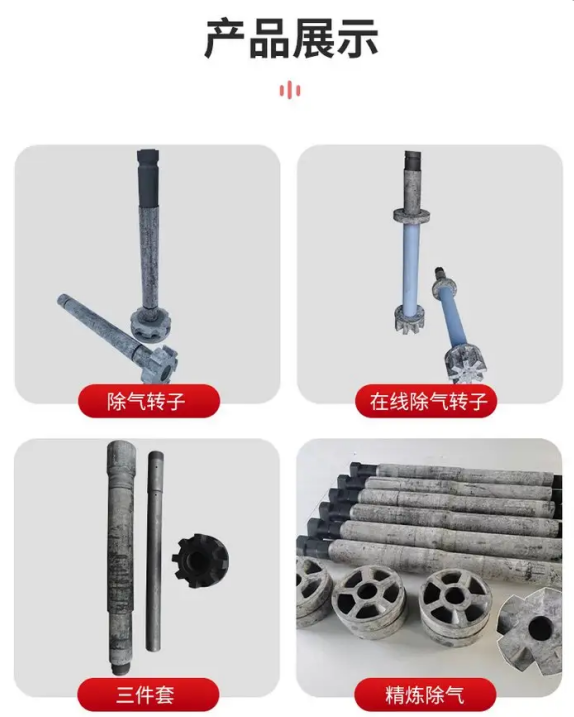
The graphite rotor shaft is a core consumable component in aluminum melt purification equipment (such as in-line degassing boxes and degassing units). Its primary function is to efficiently break up and disperse inert gas (such as argon or nitrogen) into a large number of uniform, fine micro-bubbles.
I. Core Functions & Working Principle
A graphite rotor shaft typically consists of a long shaft and a rotor head at the bottom. Its core functions during operation are as follows:
-
Rotation & Shear Action: Driven by a motor, the graphite rotor rotates at high speed (typically 300-500 RPM). The specially designed blades on the rotor head create a strong shearing effect on the introduced inert gas.
-
Bubble Refinement: It "pulverizes" the large bubbles entering the melt from porous plugs or lances, forming a cloud of micro-bubbles with small diameter (typically required to be less than 1-2mm) and uniform distribution.
-
Creating Flow & Extending Path: The rotating rotor creates strong vortex or convective flow within the melt. This continuously brings fresh melt into the reaction zone and significantly extends the rise path and residence time of the micro-bubbles in the melt.
II. Key Roles in Aluminum Melt Treatment
Through the above working principle, the graphite rotor shaft achieves crucial metallurgical effects:
-
Efficient Hydrogen Removal (Degassing):
-
Principle: Based on partial pressure difference and surface adsorption principles, hydrogen atoms in the melt diffuse into the inert gas bubbles and combine to form hydrogen molecules.
-
Effect: The finer, more numerous, and longer the bubbles reside, the greater the total gas-liquid interfacial area provided, and the shorter the diffusion path for hydrogen atoms. This exponentially increases degassing efficiency.
-
Effective Inclusion Removal:
-
Principle: As the fine bubbles rise, their surfaces adsorb suspended oxide slags, non-metallic inclusions, etc., present in the melt.
-
Effect: These adsorbed inclusions float to the melt surface with the bubbles, enter the dross layer, and are removed by skimming. This purifies the aluminum melt, significantly improving the cleanliness and mechanical properties of castings.
-
Composition & Temperature Homogenization:
-
The intense stirring action generated by the rotor rotation rapidly homogenizes the chemical composition and temperature throughout the melt bath, preventing segregation and thermal stratification, thereby providing a quality-homogeneous melt for subsequent casting.
III. Why is Graphite Chosen as the Manufacturing Material?
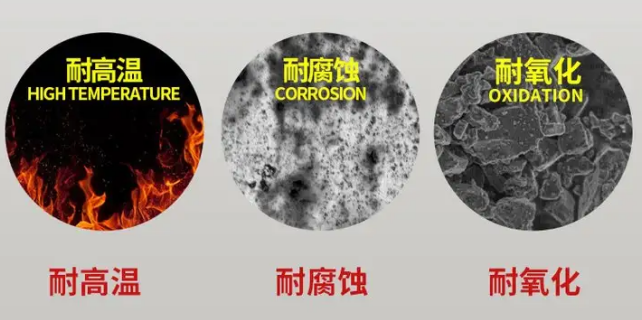
The irreplaceability of the graphite rotor shaft stems from the exceptional properties of graphite material itself:
-
Excellent High-Temperature Resistance: Can operate stably for long periods in aluminum melt at 720°C - 800°C without softening or deforming.
-
Outstanding Thermal Shock Resistance: Can withstand the thermal shock generated by rapid immersion from room temperature (preheated state) into the high-temperature aluminum melt, resisting cracking.
-
Good Self-Lubrication: Reduces friction and wear against the bearing (typically graphite or ceramic).
-
High Thermal Conductivity: Helps achieve uniform temperature distribution of the rotor itself, reducing thermal stress.
-
Excellent Machinability: Can be easily machined into various complex rotor head shapes (e.g., umbrella, paddle) to optimize hydrodynamic performance.
-
Non-Wetting with Aluminum Melt: Aluminum melt does not adhere to the graphite surface, facilitating operation and maintenance.
IV. Main Application Scenarios
Graphite rotor shafts are primarily used in the following two core types of equipment:
-
In-Line Degassing Systems:
-
This is the primary application scenario. In continuous casting production lines (e.g., for slab, billet, strip), the degassing box is an essential unit. The graphite rotor shaft, as its core component, performs continuous 24/7 degassing, ensuring the cast product is free from internal porosity and inclusion defects.
-
Furnace Treatment with Mobile Degassing Units:
-
For batch production foundries, mobile degassing units are commonly used for batch treatment within holding or melting furnaces. The degassing unit equipped with the graphite rotor is moved over the furnace, the rotor is lowered into the melt for treatment, and then raised and moved away after completion.
V. Challenges & Service Life
Graphite rotor shafts operate under harsh conditions. The main challenges and failure modes include:
-
Oxidation Erosion: At high temperatures, graphite reacts with oxygen in the air, causing gradual thinning and consumption of the shaft, especially the rotor head. This is the primary aging mechanism.
-
Erosion from Aluminum Melt Washout: The high-speed rotating rotor is subjected to continuous washout by the aluminum melt, causing the blades to gradually thin and blunt.
-
Mechanical Damage: Impact with the furnace bottom or solidified aluminum blocks due to improper operation can lead to breakage.
-
Thermal Stress Cracking: Insufficient preheating or thermal cycling can cause cracking.
Service life varies depending on the brand, quality, process parameters (rotation speed, temperature), and maintenance level, typically ranging from a few days to several weeks. Optimizing operations (e.g., adequate preheating, avoiding dry running, regular cleaning of built-up dross) is key to extending its lifespan.
Conclusion
The graphite rotor shaft is an indispensable "heart" component in modern aluminum melt purification technology. It physically transforms inert gas into millions of micro-bubbles, accomplishing the three core tasks of degassing, inclusion removal, and homogenization with high efficiency. It is a key guarantee for producing high-performance, defect-free aluminum products (such as those for aerospace, automotive, and electronic packaging foil). Its performance quality and proper usage directly determine the final aluminum product's quality and production cost.